

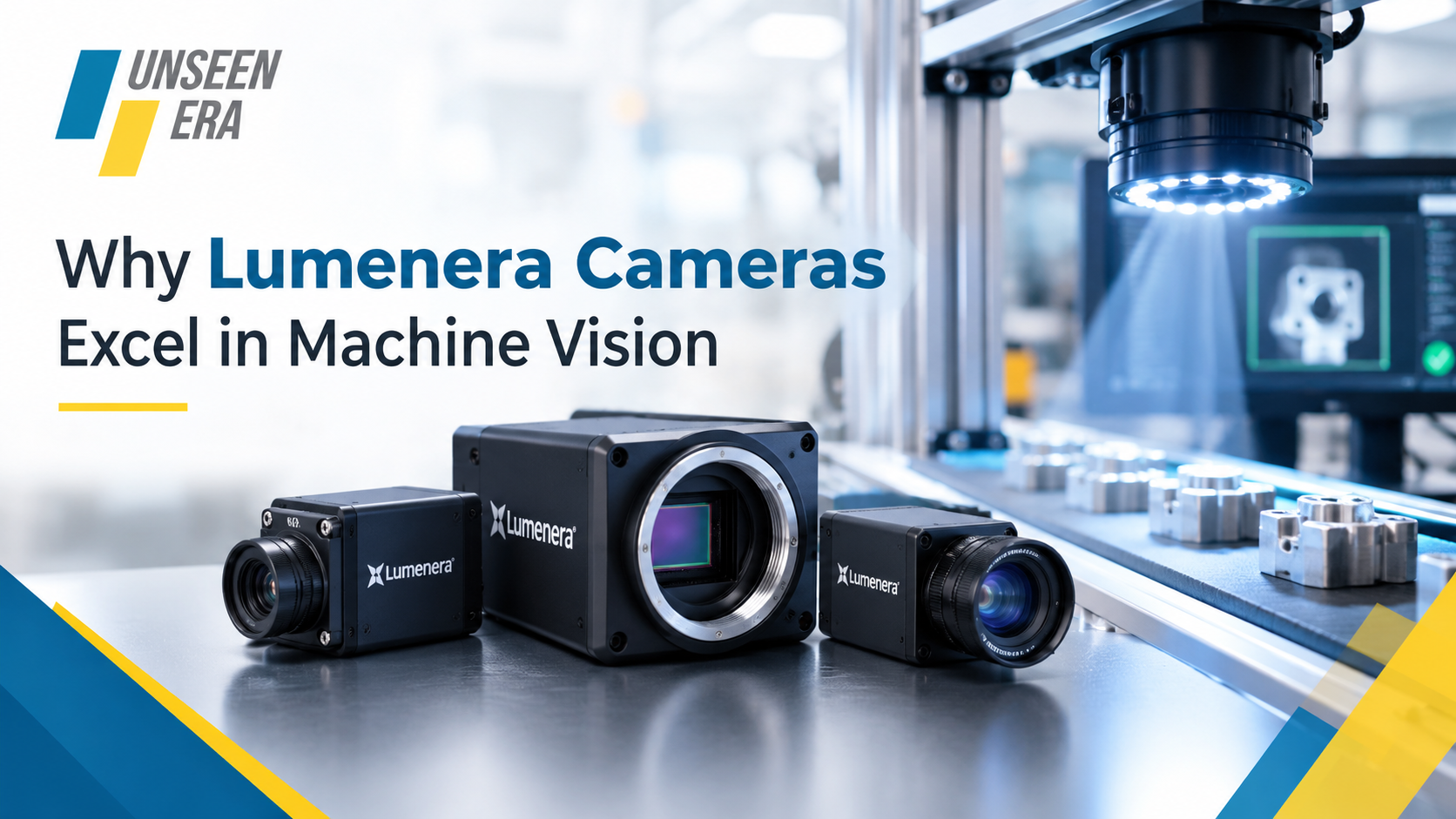
Machine vision has become an essential part of modern industrial automation, helping businesses improve product quality, increase inspection accuracy, and streamline manufacturing processes. At the heart of these systems are industrial cameras that capture detailed images for automated inspection, measurement, defect detection, and object identification. Lumenera cameras are designed for a range of imaging applications, offering camera options that can be evaluated based on image quality, resolution, frame rate, and integration requirements.
For businesses looking to implement reliable industrial imaging solutions, choosing the right camera is crucial for achieving consistent results and efficient operations. Unseen Era Technologies Pvt. Ltd. helps businesses explore machine vision technologies and identify imaging components suited to their technical requirements. Understanding the features, advantages, and applications of Lumenera cameras can help manufacturers and automation professionals make informed decisions when developing or upgrading machine vision systems. You can get us in touch with us +91-7206-86-5596 and mail us on info@unseenera.com.
What Are Lumenera Cameras in Machine Vision?
Lumenera cameras are digital imaging products that are used to produce images for use in industrial inspection, scientific imaging, laboratory research and automated quality control. In a machine vision system, a camera provides the input in the form of images that are processed by software. Different cameras may offer varied resolutions, sensor types and resolutions, frame rates, and connectivity options to fit the needs of the image acquisition system.
Lumenera cameras combined with suitable lenses, illumination, image-processing software, and computing systems can provide an all-in-one machine vision solution for industrial applications. The quality of the inspection depends on several parameters, including sensor sensitivity, exposure, resolution, and environmental conditions. There are various models available to choose from in Lumenera camera ranges, and a relevant model should be used to deliver repeatable and precise inspection results.
Why Do Lumenera Cameras Excel in Machine Vision?
Here are the key factors that make Lumenera cameras worth considering for machine vision systems.
1. High-Quality Image Capture for Precise Inspection
Image Quality Machine vision inspection software finds defects, measures, and inspects components based on image information captured by the camera. The imaging specifications of Lumenera cameras are suitable for a variety of inspection needs depending on the model.
2. High-Speed Image Acquisition and Data Transfer
The frame rate and data-transfer interface help judge if a camera can fulfill this requirement.For example, in automated production, the camera is required to image a moving object or provide inspection in a very short cycle time.
3. Reliable Performance for Industrial Imaging
Performing the same quality inspection repeatedly, requiring that the machine vision system perform images consistently between inspections and across batches.
4. Advanced Sensor Technology and Image Quality
The image sensor is what influences the degree to which a camera is sensitive to detail in low or natural light. Among the important attributes to consider are resolution, pixel size, sensitivity, dynamic range and the ability to use mono or colour imaging.
5. Flexible Integration With Machine Vision Systems
A machine vision camera needs to operate in conjunction with an inspection system’s other components such as lenses, lighting equipment, computer, software, and automation controller.
Key Features to Evaluate When Choosing a Lumenera Camera
Choosing the suitable Lumenera camera is a crucial aspect of designing a successful machine vision system. Unseen Era Technologies Pvt. Ltd. Can assist organizations in discovering the machine vision parts according to their operational and technical parameters.
1. Image Resolution and Sensor Type
Image resolution can be an important factor for applications that require small details, surface defect detection, or accuracy measurements. If a lens, lighting, and imaging system can resolve it, then a camera with a higher resolution might be able to locate small details more easily.
2. Frame Rate and Exposure Control
Frame rate refers to the speed in which a camera can take pictures. In applications where the product is moving quickly, or if the production line itself is moving quickly, a higher frame rate may be necessary.
3. Interface and Data Transfer Requirements
The camera interface is where the image data is passed from the camera to the computer or system on which it is processed. USB 3.0, GigE, and other interfaces are available on some Lumenera models.
4. Monochrome vs. Colour Imaging
The decision to use colour or monochrome imaging was driven by the nature of the information the machine vision system required to analyse. Monochrome cameras will frequently be used for contrast, edge, surface defect and dimension applications.
5. Lens Compatibility and Lighting Conditions
A camera itself cannot provide images of great quality, you also need to consider lens options, and lighting. The lens decides your field of view, zoom, working distance and image detail.
What Are the Major Applications of Lumenera Cameras in Machine Vision?
Here are some of the major applications of Lumenera cameras in machine vision.
1. Automated Manufacturing and Quality Inspection
Manufacturing machine vision cameras are used to examine products and components for surface blemishes, dimensional irregularities, and assembly faults. Lumenera cameras with the resolution and imaging features needed can be tested for surface inspection, component validation, and product orientation.
2. Electronics and PCB Inspection
Printed circuit boards (PCBs), connectors, and small electronic components and modules must be checked accurately during electronics manufacturing. Vision cameras can take images of these items that can then be analysed by software to check for faulty or missing parts, positioning errors, or issues with soldering.
3. Pharmaceutical Packaging and Product Inspection
Machine vision system commonly used for pharmaceutical packaging to inspect packaging materials, check labels, and detect visual defects in products or packaging.
4. Automotive Component Inspection
Automotive manufacturing requires the examination of components including fasteners, connectors, machined surfaces, metal parts, and assembled products. A machine vision camera can be used to automatically inspect for surface defects, check the location of components, and also assist in dimensioning with the proper optics and image-processing software.
5. Robotics and Automated Guidance
Such automated robotics systems use images from a camera to position and orient objects as they pick, place, sort, or assemble. Machine vision cameras deliver the image data that the image-processing software then uses to derive meaningful coordinates or feature data of the objects.
6. Scientific Imaging and Laboratory Automation
Lumenera cameras are also used for scientific and laboratory imaging, which often involves the need for detailed images for observation, documentation, and analysis.
Conclusion
The need for high quality, reliable cameras in automated machine vision systems is well known. Whether it’s a production line inspection, electronics manufacturing, pharmaceutical packaging, robotics or scientific applications, choosing the right camera to reduce inspection errors, improve product quality and increase efficiency can be the key to success. Unseen Era Technologies Pvt. Ltd. can help you evaluate machine vision and industrial imaging options based on your technical requirements. You can get us in touch with us +91-7206-86-5596 and mail us on info@unseenera.com.
Frequently Asked Questions (FAQs)
- Why are Lumenera cameras a good fit for machine vision solutions?
Lumenera cameras provide multiple digital imaging options to be checked out for image quality, resolution, frame rate and system integration. Based on the model, applications may include automated inspection, defect detection, scientific imaging, quality control and more.
- Which industries use Lumenera cameras in machine vision?
Lumenera cameras can be used for applications in manufacturing, electronics, automotive manufacturing, pharmaceutical packaging, scientific research, and laboratory automation.
- Which Lumenera camera is the best for industrial inspection?
At a minimum, think about the resolution needed, the frame rate, sensor, exposure control, interface, lens compatibility, and lighting options. Confirm that the camera is compatible with your software, and test the camera with samples that are similar to your inspection needs.
- Are Lumenera cameras suitable for automated quality control?
Yes. Lumenera cameras that are compatible with machine vision systems and accompanied by the proper lighting, software, and compatible system hardware can be used in automated quality control for identifying visible defects, verifying placement, and product inspection.
- What are the things to take note of when installing Lumenera cameras into an existing machine vision system?
Verify that interface compatibility, camera drivers, SDK requirements, OS needs, image-transfer bandwidth, and lens specifications are all within the scope of the installation environment.
- In what way will Unseen Era Technologies Pvt. Ltd assist in choosing a Lumenera Camera?
Unseen Era Technologies Pvt. Ltd. Can assist your business to consider camera images and explore industrial imaging machinery for a given application.



 Call
 Whatsapp
 Shop Online